
Picture a warm, rich tone wrapping around you like a cozy blanket—that’s the essence of this unique string instrument. With its larger body and longer strings, it offers a deeper musical range that captivates many.
Tuned to GCEA, it produces a mellow sound, striking a balance that complements various musical styles.
If you’re someone who loves the warmth of baritone-like sounds but still craves the portability of a ukulele, this instrument could be your ideal choice.
Each strum invites you to explore its smooth resonance, offering a delightful escape into music.
Understanding The Baritone Ukulele
If you’re curious about the unique charm of this instrument, you’re in for a treat. The baritone ukulele stands out from its smaller family members, mainly due to its deeper sound and distinctive structure.
With its longer neck and larger body, musicians appreciate the rich frequency produced, making it a favorite among players.
Originating in the 1940s, this instrument was inspired by the guitar, which adds to its appealing acoustic qualities.
The tuning resembles the top four strings of a guitar, allowing for a smooth transition between the two instruments. This similarity makes learning chords on the baritone not just easy, but also a delightful experience for beginners.
Shifting from the sound to the classification of acoustic frequencies and chords enhances our understanding of music theory.
.
What Makes Baritone Unique
When you pick up a baritone ukulele, you’re diving into a world filled with warmth and depth that really shines through its unique body shape. Musicians often fall in love with its rich tone, which offers a delightful resonance that’s a step above its smaller counterparts.
This larger instrument not only enhances overall playability but also delivers sound with impressive projection.
Typically featuring four strings tuned to D-G-B-E, it aligns closely with familiar guitar patterns, making it a breeze for guitarists to make the switch.
Whether you’re strumming folk melodies or exploring the smooth grooves of jazz, the versatility of this instrument adds a beautiful richness to any music genre. With its size and distinct tonal qualities, the baritone truly carves out its own niche, enhanced by its four strings, unique body shape, and rich resonance, making it a marvel of playability and craftsmanship in the world of music.
- The baritone ukulele is tuned to D-G-B-E, similar to the highest four strings of a guitar.
- Its larger body shape contributes to a deeper resonance and impressive sound projection.
- With four strings, it offers enhanced playability and versatility across various music genres.
- The rich tone of the baritone ukulele sets it apart from smaller ukulele models, making it popular among musicians.
Exploring Different Ukulele Sizes
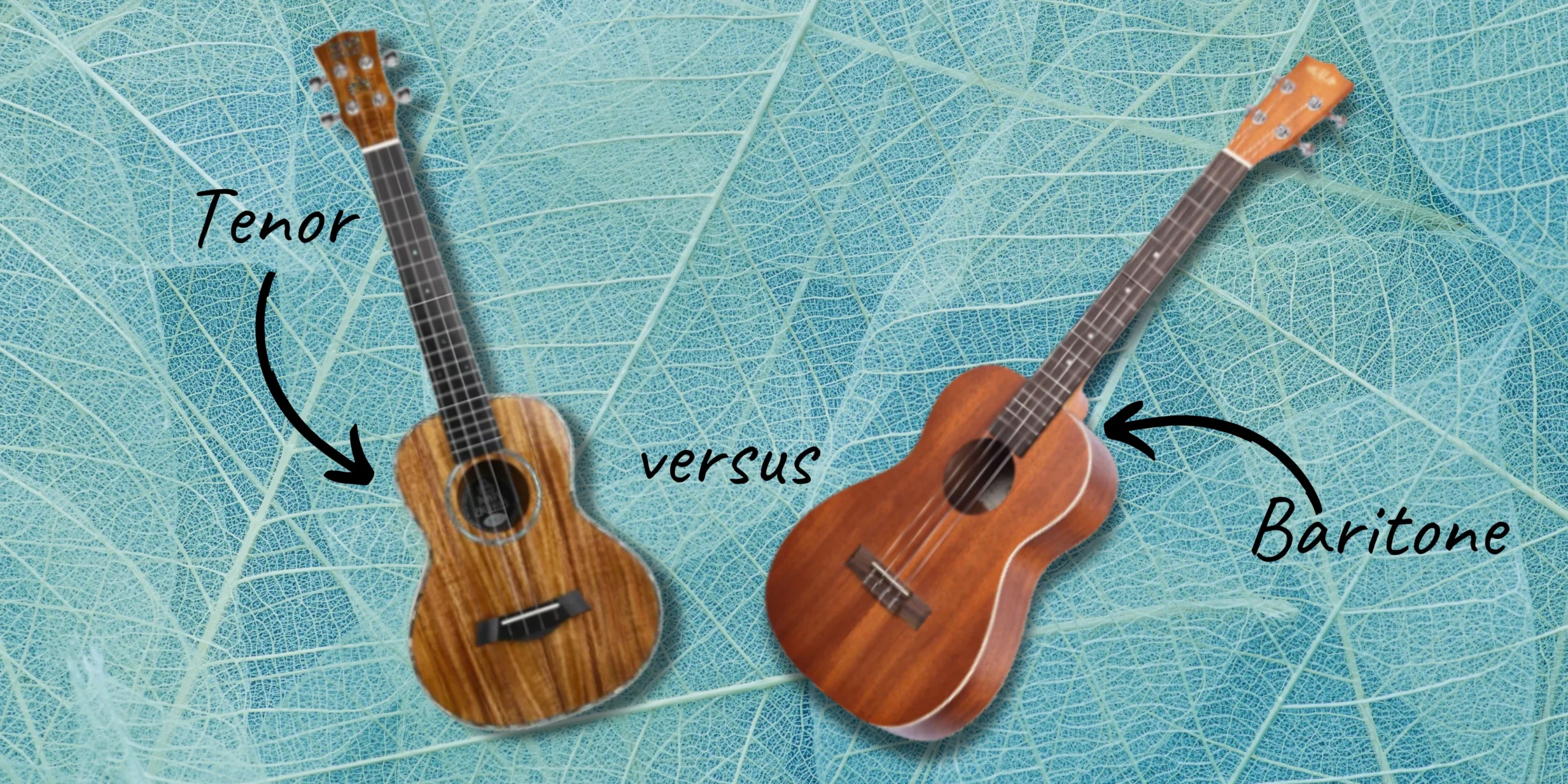
Finding the right ukulele can be a delightful journey, as each size caters to different preferences and playing styles. The soprano, being the smallest, is a great choice for those just starting out, delivering that classic sound while being lightweight and easy to handle.
If you’re looking for something a bit roomier, the concert size strikes a balance, favored by many for its versatility across various genres.
Then there’s the tenor, perfect for those who enjoy fingerpicking or want to explore complex chords. And for those who love strumming, the baritone provides a warmer tone, making it a fantastic option for guitarists easing into the world of fingerpicking and exploring various genres, especially as a beginner-friendly instrument due to its lightweight design and portability.
How Does Tuning Affect Playability
When it comes to playing the ukulele, the setup of your strings can significantly influence how it feels and sounds in your hands. Adjusting the strings isn’t just about hitting the right pitch; it can transform the entire playing experience.
Take Hawaiian music as a prime example; using open tunings allows for smoother chord transitions and creates a resonance that just sings.
Depending on the brand, like Kala or Lanikai, there are specific setups that enhance their instruments’ unique qualities.
Each tuning leads to different finger positions, making some styles more accessible than others. So, whether you enjoy strumming or diving into fingerpicking, the string arrangement can truly elevate your playing journey. Now, let’s explore how these tunings can enhance the sound of Hawaiian music, especially when using popular brands like Kala, Lanikai, and Cordoba in your setup.
The Musical Range Of Baritone Ukuleles
If you’re looking for an instrument that delivers a rich sound while still being versatile, you might want to explore what baritone ukuleles can offer. With their tuning generally set to D-G-B-E, they bring a deeper tone to the table, allowing musicians to dive into various musical styles.
This craftsmanship is evident as they smoothly transition between genres, making them stand out when compared to their soprano or concert counterparts.
While all ukuleles can play the G major scale, the baritone’s D major produces a fuller sound that captivates listeners.
Its larger size not only enhances the instrument’s resonance, but also gives it that treasured depth that players often seek. A standout feature is its ability to bridge the gap between ukulele craftsmanship, performance, and the impressive vocal range achievable in G major, D major, and C major.
Popular Genres For Baritone Ukulele
If you’re picking up the baritone ukulele, you’re diving into a world filled with musical possibilities. This instrument shines across various styles, opening up a whole universe of sound.
For instance, folk music brings a cozy vibe, showcasing storytelling through simple chord progressions that make perfect accompaniment for gatherings.
On the jazz scene, you’ll find players experimenting with rich chords and improvisation, all while reveling in that warm tone that the baritone delivers beautifully.
Reggae, with its fun strumming patterns, invites you to kick back and embrace a laid-back groove that’s hard to resist.
For those who appreciate a more refined approach, classical music presents intricate arrangements and fingerstyle techniques, highlighting the baritone’s lush sound. Whether you’re jamming with friends or enjoying a solo performance with the right F major chords, accompaniment, and essential accessories, you can elevate your skills through lessons and practice using tablature.
| Musical Style | Characteristics |
|---|---|
| Folk Music | Cozy vibe with storytelling through simple chord progressions |
| Jazz | Rich chords and improvisation with a warm tone |
| Reggae | Fun strumming patterns and laid-back groove |
| Classical Music | Intricate arrangements and fingerstyle techniques |
Essential Accessories For Baritone Players
Finding the perfect tools for your instrument can truly enhance your musical journey. For those who play the baritone, quality strings are key; they can significantly elevate your sound.
High-quality nylon or fluorocarbon strings not only provide a richer tone but also improve maintenance and care.
Don’t forget to grab a reliable tuner; a harmonious sound is essential for making beautiful music.
A durable case or gig bag is a must-have, offering protection for your instrument during travels and ensuring it stays in great shape.
If you’re looking to experiment with different keys, consider a capo. It allows you to switch keys effortlessly without straining your fingers or changing your playing techniques.
Investing in comfortable straps can make those longer practice sessions or performances much more enjoyable. So gear up and master the art of fingerstyle techniques with the right sheet music, maintenance, care, and customizations.
Tips For Maintaining Your Ukulele
Taking care of your instrument can be totally enjoyable, and regular maintenance is a fantastic way to ensure your musical partner stays vibrant and ready to play. Wipe down the body and neck with a soft, dry cloth after each session to maintain the beautiful wood types and sheen.
Every now and then, treat it to a gentle instrument cleaner for a little extra love.
Changing out your strings is a great way to keep the projection bright and the sound clear, so aim to do this every few weeks.
Don’t forget to check the fretboard for any buildup; you’ll want to keep that area clean too. With just a bit of care, your ukulele, crafted from quality wood types and featuring a well-proportioned scale length, will bring you joy for years to come as you strum its nylon or steel strings along the smooth fretboard!.
Conclusion
Wrapping things up gives us a chance to reflect on how each ukulele brings its own unique flair, much like a personal soundhole that shapes its character. Recognizing the various sizes can really help you pick the perfect fit for your playing style.
Regularly checking those pegs is key to keeping your instrument in tune, which makes a world of difference in the music you create.
Whether you’re strumming catchy patterns or diving into fingerpicking, the ukulele truly shines in every genre.
It’s more than just music; it’s about letting your creativity flow. With a bit of practice, you’ll discover your own unique intonation, making your journey with this charming instrument all the more enjoyable
Originally posted 2024-11-27 09:59:56.